NOAA declares July Warmest Global Ocean Surface Temp. on Record
 NOAA - the National Oceanic and Atmospheric Administration (also responsible for the recent NOAA Hurricane forecast of reduced hurricanes this year) declared that this past July broke previous records for the warmest global ocean surface temperature. The previous record was established in 1998. However, the combined average global land and water temperature ranked fifth warmest overall since the global temperature tracking began in 1880.
Contributing to the warmer than normal ocean temperature:
- El Nino had a continued presence across the equatorial Pacific Ocean last month.
- Many continents experienced warmer than normal temperatures during July, especially in Europe, North Africa and western North America with temperatures about 4 - 7 F above average.
- The arctic sea ice average coverage was 12.7% below the 1979 - 2000 average, good for third lowest behind 2007 and 2006. While Arctic sea ice has decreased by 6.1 % each decade since 1979, Antarctic sea ice has been increasing by 0.8% over the same time period.
NOAA U.S. highlights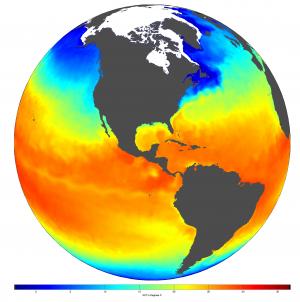 It may be hard for Americans to believe that the global surface temperature of the oceans has increased, since much of the contiguous United States experienced below average temperatures compared to the 20th century average. Ohio, Illinois, Indiana and West Virginia had their coolest July in 115 years and July was the 40th wettest on record since 1895 with on average 0.14 inches more precipitation.
On the flip side Death Valley, California experienced 22 days of temperatures reaching 120F or better, beating the previous record of 19 days. According to the Palmer Drought Index, areas rated as severe to extreme drought in July affected approximately 11% of the contiguous United States - an increase of 5% over the previous month.
After findings like these, it's hard to dispute that climate change is definitely being experienced in just about every way imaginable across the globe.