Reduce Phantom Power
Electronics use energy when you’re not around
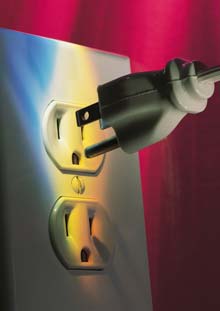
Some people give it the more ominous name of “vampire load” and some tame it down with “idle current.” But however you refer to it, standby, sleep or phantom power is still just wasted energy.
If your microwave oven displays the time when it’s not nuking TV dinners, it’s all thanks to electricity. It takes power to display the time - on some machines even more power than it takes to actually heat food. That’s because while you only use the microwave for cooking about one percent of the time (power consumption during cooking is 100 times higher), the other 99 percent of the time the clock is the only thing running.
It has been estimated that about 10 percent of total home energy use is due to appliances and electronic equipment in standby mode.
Find phantom power and Kill-A-Watt
This handy little device, and others like it, can be plugged in between an appliance and the wall, detecting just how much energy that appliance takes while in use or just waiting to be used. They usually cost about $20 to $40, well worth it to find out where you’re unwittingly wasting energy in the home.
What could possibly be using that much energy?
Aside from the glaringly obvious microwave clock, power is also being consumed by televisions, stereo equipment, DVD players and computers. Even a small amount of standby power consumption can be a problem when it’s added to other appliances that are also consuming phantom power.
Why does the equipment need to be in standby?
The reason you can turn the TV on with a remote is that it was never fully turned off to begin with. If it was, the remote wouldn’t be able to turn it back on. The television usually sits silently, screen off, while it saves information about the channel you were on and the volume level. If you’ve ever noticed the channel changes to a preset station when the power goes out, it’s because the television’s access to power was cut off.
Other power-drawing electronics include electric toothbrush charging stations, cell phone chargers and AC adaptors (wall warts). Many people don’t realize it, but a charging device left plugged in continues to draw power even if it has nothing to recharge. The best way to solve this problem is to unplug anything that’s not in use.
Solving the phantom power problem
For some areas, like computer stations or entertainment centers, unplugging is likely too difficult to be an option. That’s where power strips come in. If you plug everything into an easily accessible power bar, all you have to do is flick a switch to cut the power. What’s more, you’ll be protected from power surges that can damage equipment. Now if you could just find appliances that don’t waste energy while they’re turned on.