Better Rechargeable Batteries
Recharge with alternative energy
Disposable batteries - Whether lithium or alkaline, disposable batteries aren’t a good choice in terms of waste. They work well in high energy-drawing applications, but once drained they’re useless. Rechargeable batteries will cost more up front, but you’ll quickly realize savings by not having to buy more disposables. Alkaline batteries put out 1.5 volts initially, but this drops steadily during use, eventually to below one volt.
NiCd - Nickel Cadmium (a toxic heavy metal) batteries, although among the cheapest, are considered to have more negative environmental impacts than most other types. NiCds have problems with damage due to overcharging and improper storage. If they aren’t fully discharged before recharging, their capacity becomes reduced. It can be fixed but is somewhat of a hassle. If you have NiCd batteries that don’t hold a charge anymore, make sure to recycle them and choose a different type next time around.
Better batteries
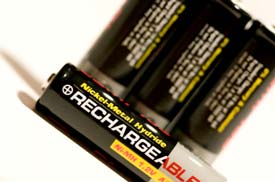
NiMH - Nickel metal hydride batteries are a good way to reduce your energy use in the home. They can be substituted for alkaline batteries in many applications and are great for wireless keyboards, phone headsets, tape recorders, radios, pagers, cameras, walkie talkies, remote controls and digital cameras.
- 1 to 5 percent of the charge is lost daily when not in use (depends on conditions)
- 1.2 volts produced until steep decline at end of charge
- Should occasionally be completely discharged to maintain capacity
- Store more energy than NiCd but for a shorter period of time
- Up to 1000 charges depending on the brand
- Perform well in temperature extremes, but not below freezing
Despite common misconceptions, short charges won’t damage these batteries. The biggest problem is with overcharging, but most chargers are made to shut off when the batteries are full. Look for smart chargers that not only stop charging when full, but can be used for storage by trickle charging to maintain the battery’s charge.
Li-ion - Lithium ion batteries are more powerful in many ways but are only used in specialized contexts.
- Used in cell phones and laptop computers
- More expensive due to complex manufacturing
- Don’t come in standard AAA, AA, C or D sizes. Might be a good thing though, because in the wrong charger they could ignite (alkalines will only burst).
- Must be recycled. Many places that sell them will recycle them as well.
- Store more energy for the same size
- Operate at 3.7 volts meaning one cell can be used in place of multiples of other types
- Can hold a charge for months without losing much power
- Should be stored fully or partially charged. If it loses too much charge, a safety mechanism won’t allow it to be recharged.
- Must only be used with intended charger
Emergency preparedness batteries
It’s a good idea to have some back-up power in case of an outage. Instead of a gas-powered generator, think about having a big rechargeable battery on hand. They can be used to jump-start your car, inflate tires, run emergency lights or radios, power your fridge or appliances, or just run home electronics when you’re away from an electricity source.
Solar chargers
There are a variety of solar chargers that can accommodate your rechargeable batteries without grid hookup. They are good to have on trips, in case of emergency, or just to avoid using non-renewable energy. Depending on the type you buy, you’ll be paying around $60 to several hundred dollars. They can come as basic solar panels and hookups, or be integrated into bags or backpacks. Look for a solar charger that will work with the batteries or devices you want to recharge. With many, you’ll have to buy a battery charger dock that attaches to the separately purchased solar charger.